The upside of technical debt: shrinking it brings independence, growth and jobs
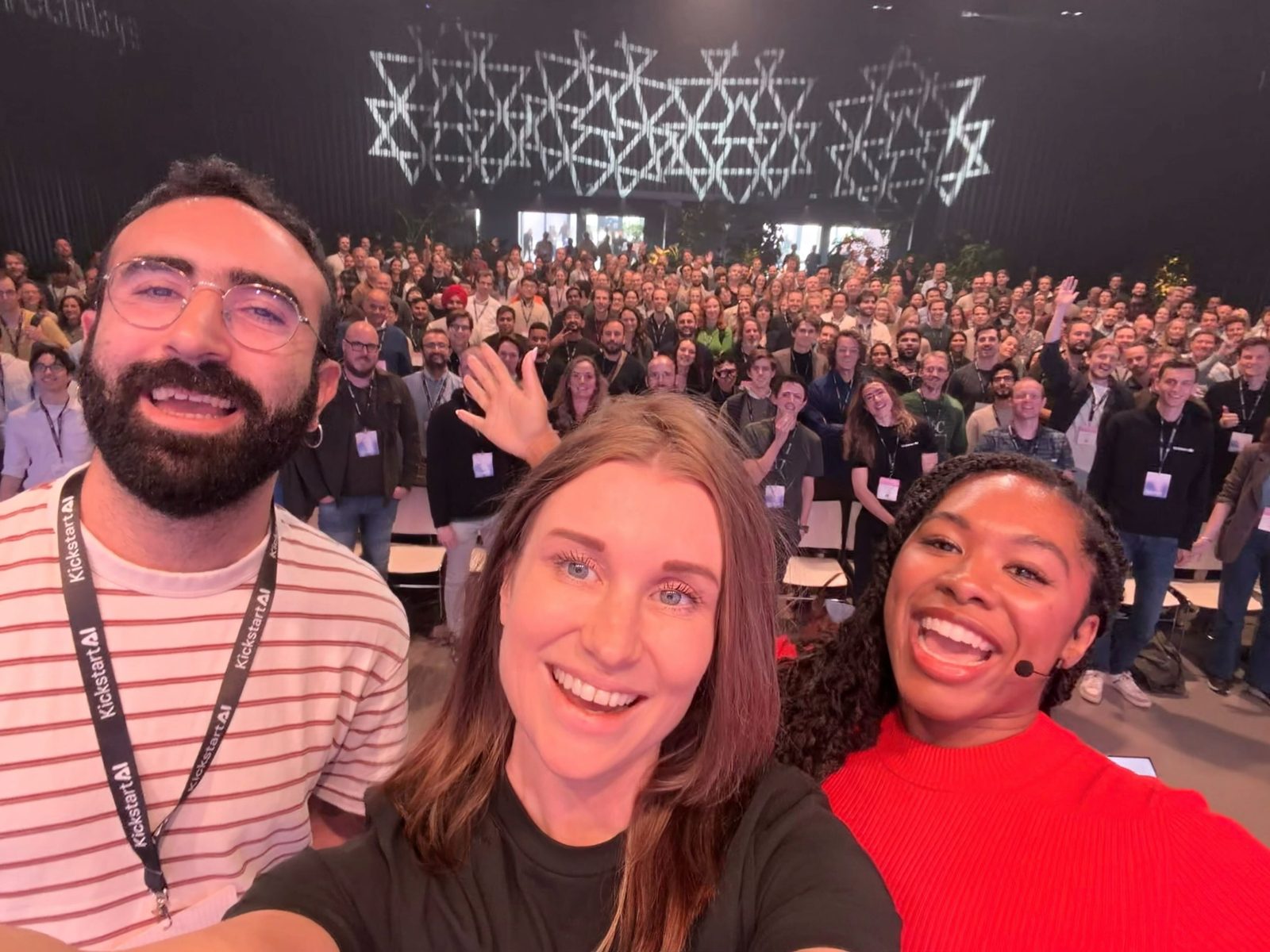
On 15 October I went to KickstartAI TechDays 2026 at Circa in Amsterdam. The theme was applied AI, how to put it to work, and four tracks ran side by side, including LLMs in production and AI strategy.
Listening to the talks, I kept thinking about technical debt. Countries that don’t build their own hardware and AI models carry a lot of it, and so do companies that rely completely on outside providers. Leaders and policy makers should see the bigger picture: closing the gap creates independence, for a company or a whole country, along with jobs and economic growth. Catching up also gives a lot of people the chance to develop their talent.
The risks, and how much is left to build
The day opened with Lokke Moerel, professor of global ICT law at Tilburg University, and her talk was one of my two highlights. Her first point was that the speed of developments is mind boggling, and that agentic AI will disrupt even Big Tech.
The first risk she raised is cultural. A World Economic Forum piece on her slides quoted Stanford’s Yejin Choi, who argues that the cultural dominance of English in LLMs silences other cultures and shuts whole communities out of AI’s benefits. Small language models, trained on smaller and domain specific data, are one way out.
Her point that stayed with me most was about dependence. Using models that others build looks great, and you may feel your data is private. But when you can’t build your own models, you also lose the talent and the expertise to build the next ones, and the technical debt keeps growing.
Policy can help make that debt smaller. Since October 2025, the EU Cloud Sovereignty Framework lets public buyers reject cloud tenders that don’t reach a minimum level of sovereignty, next to national standards such as France’s SecNumCloud and a German framework from the BSI this year.
The Dutch government did its part by backing GPT-NL, the Dutch language model, with €13.5 million in 2023. Building it takes care: every data source goes through six steps, including language filtering and removing personal and harmful data. Its lessons: quality matters more than quantity, so scraping isn’t necessary, synthetic data is no panacea, and standard anonymisation doesn’t work.
Catching up means building the models, the hardware, the software and the infrastructure around them, and training the talent to do it. Paying off this kind of technical debt is a mountain of work for the next five to ten years, and every part of it needs people.
AI on our phones, with our privacy intact
My other highlight came later in the day. Sarthak Anand, a senior data scientist at Libra AI, talked about running an LLM app on the iPhone in production. Quantization stores a model’s weights in fewer bits, 4 instead of 32, so it fits in a fraction of the memory, and Apple’s open source MLX framework runs such models on Apple silicon. On an iPhone, MLX Swift handles models of about 1 to 4 billion parameters. His example was a Dutch English translation model of 0.6 billion parameters, in a 4 bit version.
That’s the phone I’d like to have. Two people without a common language could talk through a translation that runs on the phone itself, with no internet connection. You could improve a photo, or remove something from it, and the photo never leaves your phone. A small model running on your own phone lets you use AI without sending your data anywhere. It ties straight back to the small language models from the keynote.
Spec first, then the code
The session I found most inspiring came from ING. Liangliang Zheng and Kevin Kewal, from ING’s Global Financial Crime and Fraud Prevention team, started with a problem every team knows: six months after a feature ships, nobody remembers why it was built the way it was. Their example user story was one sentence, with an acceptance criterion that said to pass all unit tests, and the reasons behind the code were spread over Teams, Confluence, Azure DevOps, GitHub and people’s memory.
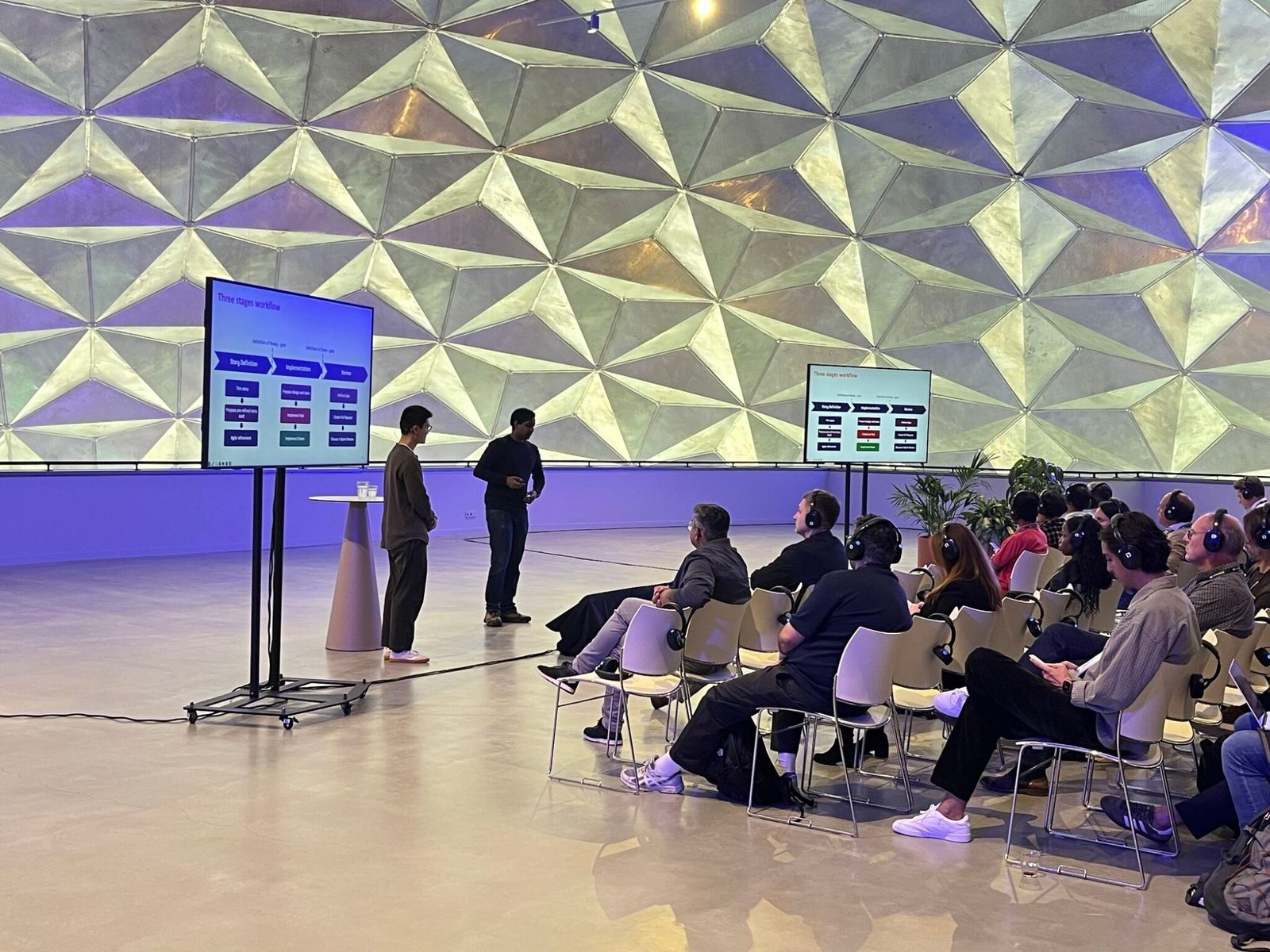
Their answer is spec driven development. A reviewed spec sits between the one line story and the code, so the what and the why stay in the repo. A Copilot skill drafts it from the story, the codebase and past specs, and the team refines it as usual. Test driven development sits inside: the agent writes failing tests from the spec, a person checks that they cover every scenario, the agent makes them pass, and a person checks the result. Every no goes back to the spec. “SDD defines Ready, TDD proves Done”, as their slide put it, and the tool they use is OpenSpec. Their advice: start with one story.
Writing the spec first is how a team still knows, six months later, why a feature was built the way it was. I know a lot of teams in scale ups and startups that work this way, and it’s close to how we work at GeoBirds. I also heard that some companies use Google’s DevOps research, DORA, to measure how their teams deliver, and I’d like to see whether the two can be combined.
Companies taking AI into their own hands
The companies on stage want to become AI native, without relying completely on outside providers. Pratyush Sinha, technical AI executive at Decathlon, showed a learning app whose lessons are written by AI agents, with people only approving the plan and the release. Owning your hardware helps too: once you can deploy models on it yourself, it becomes your own token factory, and people can try new ideas without worrying about a usage bill. Companies are taking AI into their own hands, but most still have a long way to go to catch up.
The questions I took home
I keep coming back to what all this means for our jobs. If agents write more of the code, the content and even the specs, what happens to job satisfaction? How should pay change when part of the work is done by an agent? And how will people collaborate, with each other and with their agents? Google’s 2025 DORA report calls AI an amplifier: it makes a team’s existing strengths and weaknesses bigger. So how do we make sure it amplifies the good parts of how we work together? These are open questions for me, and if you’re thinking about them too, let’s talk whenever we meet at an event, or online.
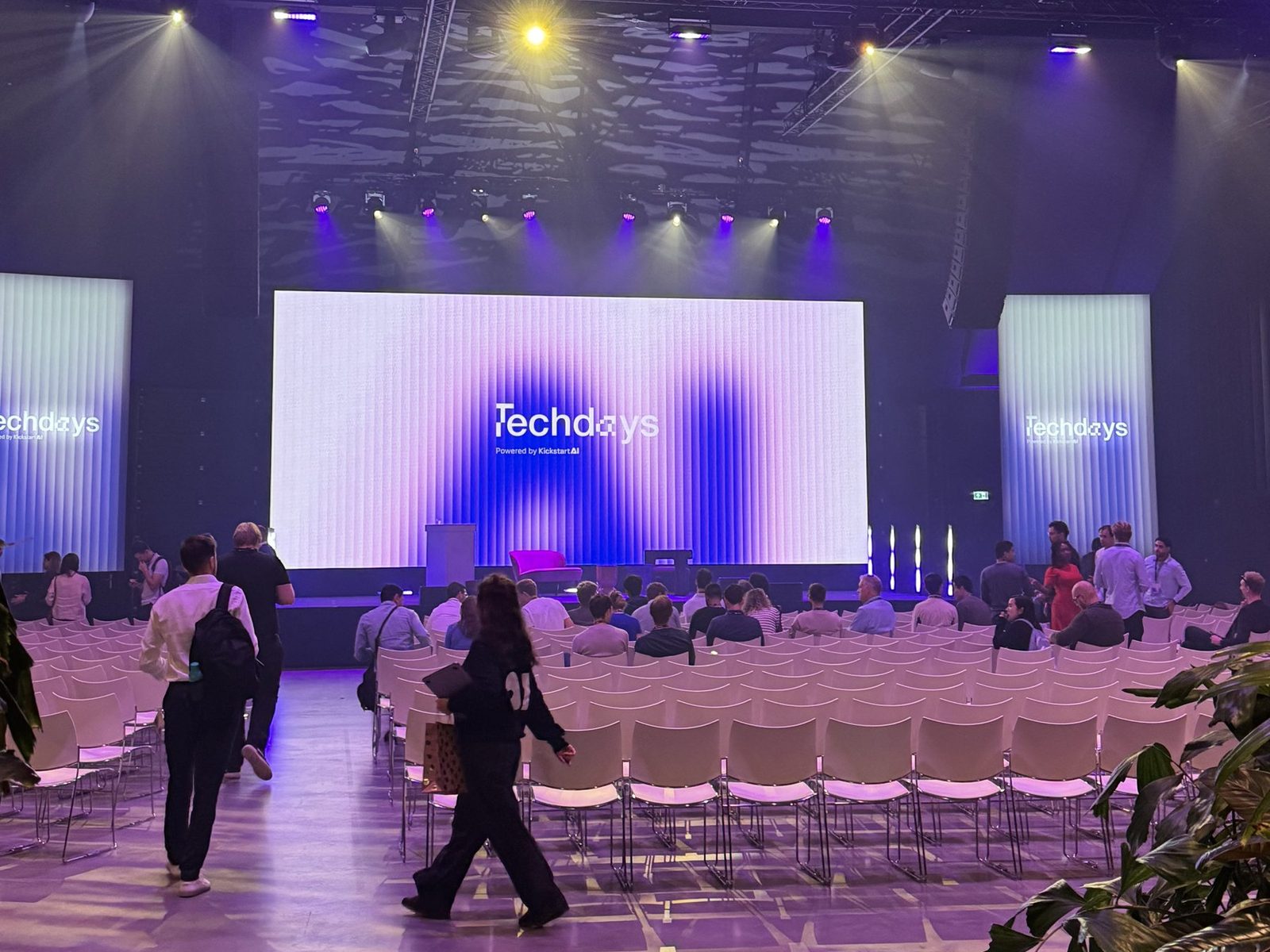
Compliments to the KickstartAI team: the day was very well organised. I helped organise PyData Amsterdam this year, so I know how much work that takes. Circa was a really nice location. We came by car and found enough parking, and for people coming by train, a shuttle bus ran from Amsterdam Sloterdijk station in the morning and again in the afternoon, which was nice and well thought out. The lunch was very good too, and snacks were never far away.